Difference Between a Hard Hat and a Safety Helmet

Choose the Right Head Protection! Hard hats vs. safety helmets: Explaining the distinctions & helps you select the best option for your construction needs.
Facebook
Twitter
LinkedIn
Hard Hats VS Safety Helmets

Introduction

In the area of construction and industrial activities, head protection is not only mandated by OSHA but it constitutes an utterly mandatory factor. However, selecting the optimum protective gear often leads to confusion, especially when deciding what is the difference between a hard hat and a safety helmet? Both are created to guard, but each has a particular purpose and is completed with exclusive properties. This article will go deeper into the most prominent distinctions between hard and safety helmets, guiding you through picking the ideal type for your job.

What is a Hard Hat?

Construction hard hats are well-known on construction sites. They protect workers from falling objects or impact injuries that may be caused by other hazards. Hard hats are shaped with a sturdy outer shell that absorbs the energy of blows to the head and an inner suspension system that creates a space between the shell and the wearer’s head to decrease the impact further. They are crafted from high-density polyethylene or polycarbonate, resistant to impact and breakage.

Hard Hat

What is a Safety Helmet?

In the same way, are becoming prevalent in the industry because they offer increased safety. In hard hats, the head is covered from the front part but does not provide sufficient cover for the back and both sides of the head, especially in cases of cycling or mountaineering (when lateral impacts are common). Modern construction site safety helmets now have integrated features such as face shields, hearing protection, and chin straps. The latter keeps the helmet in place in case of a fall or impact.
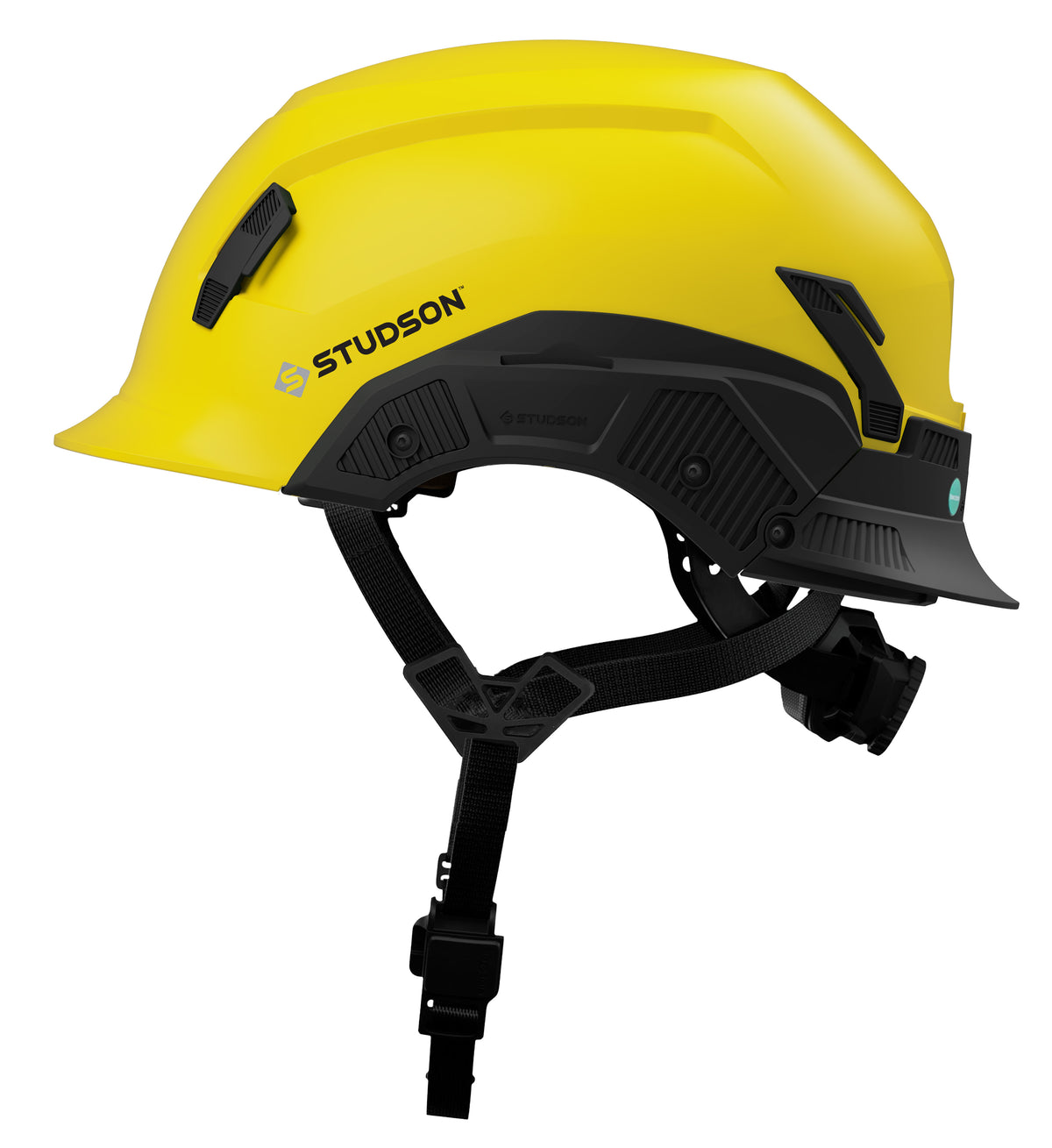
Studson SHK-1 Non-Vented Helmet

Comparing Features and Uses

When examining the safety helmet vs hard hat debate, the major difference between a construction hard hat and a construction site safety helmet is their design and the level of protection they grant. A hard hat is preferably used for things like the massive impact of falling objects or tools from above. Hard hats are cost-effective and suitable for construction and industrial settings. Helmets can prevent head and brain injuries because they provide complete head protection, which is considered important in cases where you are likely to slip and fall. Additionally, safety helmets often feature enhanced adjustability and comfort, making them ideal for prolonged use in dynamic environments.

Workplaces, where safety helmets are becoming more popular, are likely environments where employees have to bend or lean for any reason that could lead to helmets falling off. Helmets need chin straps to stay securely on, thus providing permanent protection.

Safety Standards and Regulations

The safety hard hat and the construction safety helmet should pass the standard safety specifications. In the context of the United States, OSHA (Occupational Safety and Health Administration) establishes norms for head protection in the workplace. Recent discussions like Osha announcing a switch from traditional hard hats to safety helmets indicate the safety standards evolution and highlight the benefits of modern safety helmets over traditional hard hats. ATI Construction Products not only offers a diverse array of safety helmets suited for various construction challenges but also enhances safety management through the innovative use of the Site Document Safety Management system. This approach improves safety standards, and streamlines compliance and operational efficiency.

Conclusion

The constructional hard hat and safety helmet selection process depends mainly on the distinct job hazards and the workspace conditions. At the same time, the traditional hard hat protects against forward and backward movement, and a multi-directional safety helmet also guards against the impact of sudden changes in direction and falls. The development and standards advancement is an enabler for improved helmet adoption, which in turn offers the workers enhanced security in different industries.

  • 1. Are safety helmets replacing hard hats?

    Though safety helmets are more protective and are gradually becoming more widespread, hard hats are still commonly used as they have proved to be very effective in protecting against impacts from above.

  • 2. Will OSHA require safety helmets?

    Currently, OSHA requires workers to wear head protective equipment without indicating the difference between hard hats and safety helmets. The kind of protection depends on the specific job risks that are encountered.

  • 3. Are hard hats being phased out?

    In this regard, the use of hard hats seems to be permanent. They still have their place in many industries, often where fall objects are a high-risk factor.

  • 4. Is OSHA changing hard hats?

    OSHA frequently revises its safety standards based on recently gained knowledge and technology. Further recommendations or adjustments regarding higher-level head protection, like safety helmets, may occur in the future, but hard hats are still up to the standards.

Introduction

In the area of construction and industrial activities, head protection is not only mandated by OSHA but it constitutes an utterly mandatory factor. However, selecting the optimum protective gear often leads to confusion, especially when deciding what is the difference between a hard hat and a safety helmet? Both are created to guard, but each has a particular purpose and is completed with exclusive properties. This article will go deeper into the most prominent distinctions between hard and safety helmets, guiding you through picking the ideal type for your job.

What is a Hard Hat?

Construction hard hats are well-known on construction sites. They protect workers from falling objects or impact injuries that may be caused by other hazards. Hard hats are shaped with a sturdy outer shell that absorbs the energy of blows to the head and an inner suspension system that creates a space between the shell and the wearer’s head to decrease the impact further. They are crafted from high-density polyethylene or polycarbonate, resistant to impact and breakage.

Hard Hat

What is a Safety Helmet?

In the same way, are becoming prevalent in the industry because they offer increased safety. In hard hats, the head is covered from the front part but does not provide sufficient cover for the back and both sides of the head, especially in cases of cycling or mountaineering (when lateral impacts are common). Modern construction site safety helmets now have integrated features such as face shields, hearing protection, and chin straps. The latter keeps the helmet in place in case of a fall or impact.

Studson SHK-1 Non-Vented Helmet

Comparing Features and Uses

When examining the safety helmet vs hard hat debate, the major difference between a construction hard hat and a construction site safety helmet is their design and the level of protection they grant. A hard hat is preferably used for things like the massive impact of falling objects or tools from above. Hard hats are cost-effective and suitable for construction and industrial settings. Helmets can prevent head and brain injuries because they provide complete head protection, which is considered important in cases where you are likely to slip and fall. Additionally, safety helmets often feature enhanced adjustability and comfort, making them ideal for prolonged use in dynamic environments.

Workplaces, where safety helmets are becoming more popular, are likely environments where employees have to bend or lean for any reason that could lead to helmets falling off. Helmets need chin straps to stay securely on, thus providing permanent protection.

Safety Standards and Regulations

The safety hard hat and the construction safety helmet should pass the standard safety specifications. In the context of the United States, OSHA (Occupational Safety and Health Administration) establishes norms for head protection in the workplace. Recent discussions like Osha announcing a switch from traditional hard hats to safety helmets indicate the safety standards evolution and highlight the benefits of modern safety helmets over traditional hard hats. ATI Construction Products not only offers a diverse array of safety helmets suited for various construction challenges but also enhances safety management through the innovative use of the Site Document Safety Management system. This approach improves safety standards, and streamlines compliance and operational efficiency.

Conclusion

The constructional hard hat and safety helmet selection process depends mainly on the distinct job hazards and the workspace conditions. At the same time, the traditional hard hat protects against forward and backward movement, and a multi-directional safety helmet also guards against the impact of sudden changes in direction and falls. The development and standards advancement is an enabler for improved helmet adoption, which in turn offers the workers enhanced security in different industries.

  • 1. Are safety helmets replacing hard hats?

    Though safety helmets are more protective and are gradually becoming more widespread, hard hats are still commonly used as they have proved to be very effective in protecting against impacts from above.

  • 2. Will OSHA require safety helmets?

    Currently, OSHA requires workers to wear head protective equipment without indicating the difference between hard hats and safety helmets. The kind of protection depends on the specific job risks that are encountered.

  • 3. Are hard hats being phased out?

    In this regard, the use of hard hats seems to be permanent. They still have their place in many industries, often where fall objects are a high-risk factor.

  • 4. Is OSHA changing hard hats?

    OSHA frequently revises its safety standards based on recently gained knowledge and technology. Further recommendations or adjustments regarding higher-level head protection, like safety helmets, may occur in the future, but hard hats are still up to the standards.

Related Posts

Newsletter

Sign up for ATI CONSTRUCTION PRODUCTS email newsletter for the newest and latest innovations in the Construction Industry.

Scroll to Top
ATI Construction Products
Privacy Overview

This website uses cookies so that we can provide you with the best user experience possible. Cookie information is stored in your browser and performs functions such as recognising you when you return to our website and helping our team to understand which sections of the website you find most interesting and useful.